Prop 4: Allow Public Financing of Election Campaigns Measure
This measure tries to level the playing field in political spending. If voters pass it, Prop. 4 lifts the current ban on using public money for election campaigns. That would let state and local governments set up programs that use tax dollars to help fund political campaigns.
Supporters of Prop. 4 say it gives candidates without rich donors a fair shot to compete and helps combat the influence of dark money in politics. It also raises the penalties for illegal foreign spending on elections.
Opponents believe taxpayer dollars should go to public services, not political campaigns.
The measure would cost the state a few hundred thousand dollars a year to administer — less than 0.1% of the General Fund.
“Democracy works best when everyone has a voice in our state’s future, not just the wealthy and well-connected,” said Darius Kemp, Common Cause’s California executive director.
The measure is currently backed by the Californians for Fair Elections coalition, California Clean Money Action Fund, Common Cause California, and the League of Women Voters of California, along with the ACLU, AFSCME, California Nurses Association, and California Labor Federation.
If passed, California would join 14 states and Washington, D.C., that already let public money fund certain political campaigns.
Prop. 39: Voter ID Proposal
The ‘California Voter Identification, Citizenship Verification, and Registered Voter List Administration Initiative’ would require voters to present a government-issued ID for in-person voting or provide the last four digits of a government-issued ID designated during voter registration for mail-in voting.
One major concern is that this proposition creates barriers to everyday voters, especially those less likely to have a qualifying government ID. Historically, this has included low-income voters, elderly voters, and Black and Latino people.
Assemblymember and Vice Chair of the California Legislative Black Caucus Isaac G. Bryan said “Prop. 39 is the latest attack on voting rights in California,” arguing that the initiative is intended to disenfranchise Californians, particularly Black voters in the state.
Republican supporters of the measure argue it would strengthen election security by “preventing fraudulent voting.” Despite Trump’s claims, voter fraud is exceedingly rare in California. Even conservative organizations like the Heritage Foundation found just 70 documented cases in the past 25 years, out of tens of millions of votes cast.
In California, voters currently only need to provide an ID and Social Security number during registration, but not when they vote.
Prop. 40: Billionaire Tax
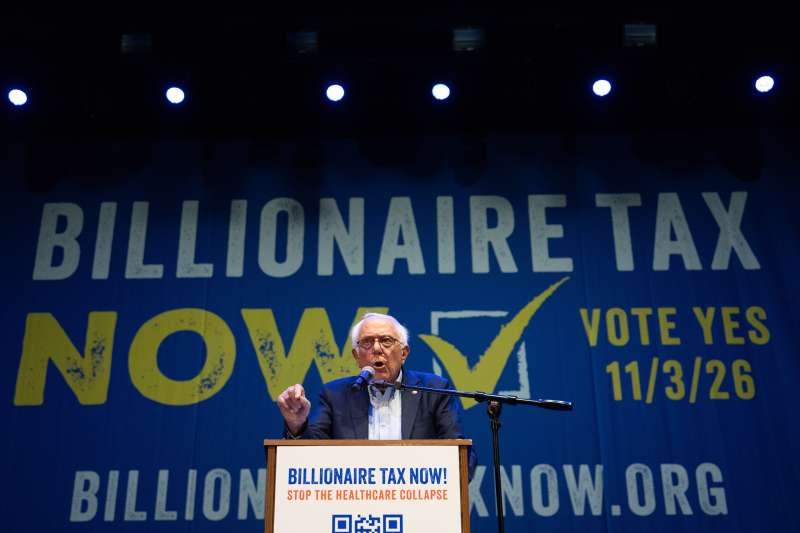
California’s Billionaire Tax Act is one of the most talked-about propositions on the ballot. The proposed measure collected over 1.6 million signatures to qualify for the November ballot in California.
If passed, it would impose a one-time 5% tax on any California resident with $1 billion or more in accrued wealth or income. The money would go into a special fund for state health care programs, like Medi-Cal, food assistance, and public education.
Although California voters strongly support the measure, it remains a divisive topic among registered Democrats. Prop. 40 is opposed not only by wealthy investors and tech companies, but also by Gov. Gavin Newsom.
Political opponents argue that the measure will drive wealthy business owners out of the state. Additionally, California billionaires have poured nearly $40 million into unsuccessful attempts to keep it off the ballot.
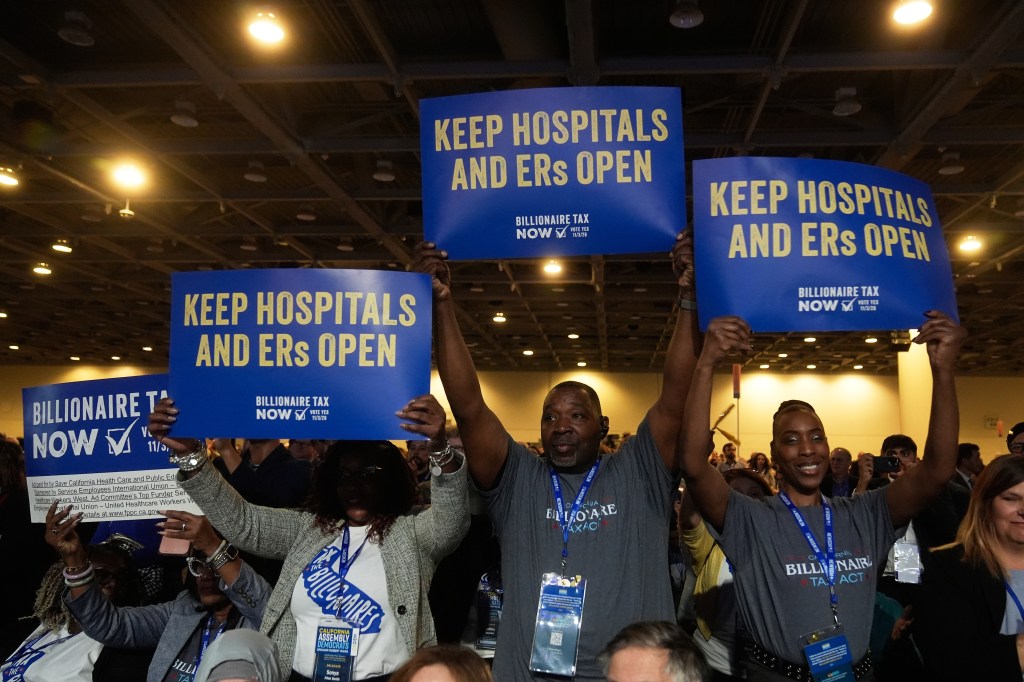
Nearly 40 unions, advocacy groups, and national organizations back the measure, including labor unions such as the Service Employees International Union-United Healthcare Workers West (SEIU-UHW), AFL-CIO, American Federation of Teachers (AFT), American Federation of Government Employees (AFGE), and UNITE HERE.
But some other unions, like the California Teachers Association and the State Building and Construction Trades Council of California, oppose it. The teachers union claims it opposes the proposition because it “will not provide the sustainable and long-lasting funding that our schools and communities deserve.” Instead, CTA has endorsed Prop. 3, the extension of the original Prop. 55 tax, as an alternative to the billionaire tax measure (see summary below).
Prop. 42: Ban on Personal Property Taxes
Proposition 42 directly competes with Prop. 40 to cancel it out by taxing the same wealth, including business assets, investment accounts, and unrealized gains.
This is key: If Prop. 43 gets more votes, EVEN if the billionaire tax also passes, Prop. 42 would cancel out Prop. 40.
Introduced by a nonprofit group called Building A Better California, and backed by Google co-founder Sergey Brin, Prop. 42 was a direct response to the growing popularity of the billionaire tax.
This measure will block new state taxes on personal property. Prop. 42 goes further than banning new taxes; it also includes a retroactivity provision, which is a separate and important piece. That means the state cannot easily tax past earnings.
The measure’s main opponent is SEIU-United Healthcare Workers West — the same union sponsoring Prop. 40 — which argues Prop. 42 is designed to trick voters into making a wealth tax on billionaires impossible to apply, rather than genuinely protecting everyday people’s property from taxation.
Prop. 43: Two-Thirds Vote Requirement for Local Special Tax Initiatives and Property Tax Initiative Prohibition Amendment
In 2017, a California Supreme Court ruling opened a loophole letting some citizen-led special taxes pass with a simple majority instead of two-thirds…so 51% or more of the vote.
This initiative makes it harder for cities and towns to pass special local taxes for specific services like fire departments or libraries. Right now, those taxes pass if more than half of voters say yes, but Prop. 43 would require at least two-thirds of voters to agree.
It would make it much harder for local cities and towns to raise money through new taxes, continuing a 10-year push by business groups to make California’s tax rules stricter.
The Howard Jarvis Taxpayers Association, a conservative-leaning taxpayer group, sponsored Prop. 43. Reform California, headed by Republican State Assemblymember Carl DeMaio, also backs it.
Evolve California, a grassroots organization focused on public education funding and Prop. 13 reform, and State Assemblymember Buffy Wicks oppose Prop. 43.
Prop. 45: Changes to Environmental Review Process for Certain Projects Initiative
Prop. 45 speeds up the review process for major projects like
housing, water systems, clean energy, medical facilities, public safety infrastructure (excluding jails and prisons), internet, schools, and transportation. Supporters say that it could speed up environmental review for housing and infrastructure.
This proposal, however, has been hugely unpopular with environmental advocates because it weakens California Environmental Quality Act (CEQA) protections in order to hurry development, often at the expense of community and environmental oversight.
Opponents argue that Prop. 45 contains loopholes that give corporations and oil, gas, and electric utility companies the power to fast-track projects that would otherwise require more thorough environmental reviews. A coalition of over 300 organizations has urged people to vote no on the proposition.
Advocacy groups also worry tech companies will use this measure to sidestep construction practices and fast-track data center expansion. Communities would have less say, less information, and fewer tools to weigh in on developments built near homes, schools, and water supplies.
It also lets polluters bypass cleanup requirements and shifts the financial burden of removing contaminants from resources like water onto the public.
Supporters argue that long review processes make building homes, clean energy, water systems, and other vital projects slower and more expensive, which drives up costs for everyday Californians. But the measure doesn’t actually guarantee lower prices — it has no rules to make housing cheaper or cut utility bills.
Prop. 3: The California Children’s Education and Health Care Protection Act (an extension of Prop. 55)
California’s highest earners currently pay slightly more on their annual taxes, but the initiative will change the California Constitution to keep the state’s highest tax rates on higher incomes. These rates are set to end in 2031.
The main people it affects are those who earn more than about $360,000 a year if they are single, or over $721,000 a year if they are married. This is roughly only the top 2% of earners in the state.
A majority of the money goes to K-12 schools (89%), with 11% to community colleges. Local school boards decide how to spend it, but they can’t use it for administrative costs. It also increases General Fund revenue available for education, health care, budget reserves, and other programs
Supporters of the amendment include the California Teachers Association (CTA), SEIU California, the California Federation of Teachers (CFT), the California School Employees Association (CSEA), the California Democratic Party, and the California Professional Firefighters.
The teachers union sees this measure as an answer to Prop. 40, calling it a temporary fix that tries to do the same thing. Instead, they prefer Prop. 3, which permanently keeps higher taxes on top earners to fund public schools.
Opponents argue that taxes aren’t a limitless solution for budget gaps and that California already has some of the highest income taxes in the nation.