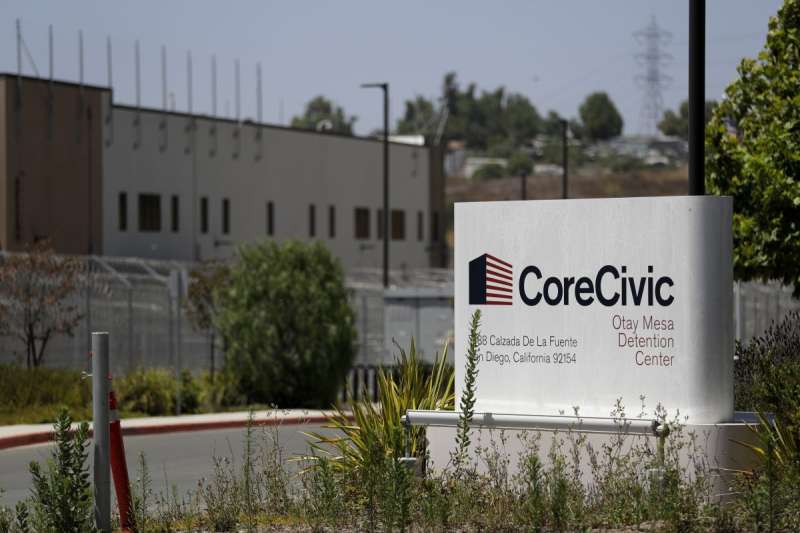
Private prison company CoreCivic has sold two of California’s largest immigration detention centers to the US Department of Homeland Security (DHS) in a $1.5 billion deal, the company announced last week.
According to a press release by CoreCivic, the company expects to use a portion of the net proceeds from the sales to repay all or a portion of its outstanding debt of $270 million. The remaining net proceeds will be used for general corporate purposes, which may include additional debt repayments and share repurchases of the company’s common stock.
The sale includes the Otay Mesa Detention Center in San Diego County, which has more than 1,400 individuals detained, and the California City Detention Facility in Kern County, which also holds over 1,400 detainees.
According to a filing with the US Securities and Exchange Commission, the transaction closed July 2, with the federal government paying $739.2 million for the Otay Mesa facility and $732.6 million for the California City facility.
The sales are likely to make it harder for the state to conduct oversight into the facilities.
California law mandates that privately operated detention facilities be overseen by local and state officials, as well as members of Congress.
California’s AB 3228 (the California Accountability in Detention Act) was signed into law in 2020, holding private, for-profit detention facility operators—including immigration and civil detention centers—accountable in state courts for the health and safety standards agreed upon in their government contracts. The bill focused on accountability and human rights in private detention facilities, including those used to hold immigrants.
With DHS now owning both buildings, gaining transparency into their internal operations will likely become more difficult.
“It seems like a very clear attempt to evade oversight and accountability,” Alexa Van Brunt, a civil rights attorney with the MacArthur Justice Center, told Mother Jones. “If they own the building, then there is a very good argument that a state law cannot trump federal ownership.”
CoreCivic said it expects to receive about $1.1 billion in net proceeds from the sale and will continue operating both detention centers under its existing contracts with US Immigration and Customs Enforcement. The company noted those agreements could be renegotiated now that the federal government owns the facilities.
RELATED: Los Angeles mom speaks out after her husband was deported