A California bill could require hotel managers to notify staff and guests when ICE is on the premises.
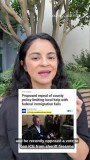
On August 3, 2026, the California Senate Appropriations Committee reviewed AB 2721. The bill, introduced by Assemblymember Juan Carrillo (D-Palmdale), would require hotel managers, or “operators,” to post clear notices when they know U.S. Customs and Border Protection or Immigration and Customs Enforcement agents will be staying on-site.
“The bill’s intent is not to identify individuals, but to inform workers about operational conditions that may affect their safety,” said Assemblymember Carrillo at a hearing in late June.
He assured the public that the bill does not regulate the actions of the federal government or create long-term burdens even if federal policy changes.
“The notice outlet is minimal and consistent with existing posting obligations,” he said. “This bill reaffirms the precedent to balance everyone’s needs. After the deaths of two Americans and 14 detainees, including some in my district, I sense the public’s trust at this point for communities to feel safe in their presence.”
The presence of ICE and Border Patrol agents in hotels has become increasingly more common since immigration raids expanded in mid-2025–after President Donald Trump took office for a second time. Their presence has become so commonplace that contingents of community organizers mobilized to monitor ICE activity at hotels across California.
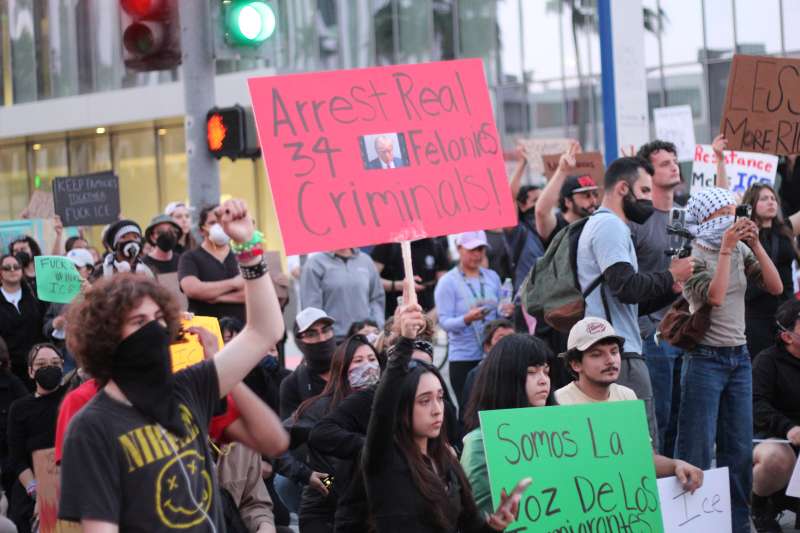
During the months of June to August 2025, activists frequently gathered outside hotels where federal agents were confirmed to be staying. Locals chanted loudly on megaphones, banged on drums, and created noise disruptions to signal federal presence.
The “No Sleep for ICE” events were the counter to traditional large-scale protests, resulting in a different kind of direct-action resistance taking root across Southern California. However, organizers noted that noise protests alone didn’t necessarily address the fact that many of the hotel employees themselves are undocumented or mixed-status community members vulnerable to workplace enforcement.
What would the bill accomplish?
The bill, which is currently making its way through the Senate, hinges on two main requirements:
- Mandatory disclosure: If a hotel manager or “operator” has actual knowledge that a reservation has been made by ICE or Border Patrol, they must disclose the potential presence of federal officers to staff and guests.
- Public Signage: The hotel must post a visible notice in a public and accessible area where it can be seen by all employees and guests. The notice must be put up no later than the arrival of the federal officers and must remain posted for the entire duration of their stay.
The bill relies on “good-faith” awareness of a reservation. Crucially, it avoids creating any investigative obligation for managers and does not require hotels to proactively search guest lists or investigate whether agents are present.
If passed, AB 2721 would be the first law to require hotels to warn both employees and guests about federal immigration activity. The bill combines two things that don’t usually mix: rules requiring employers to give workers advance notice, and federal immigration enforcement at private businesses like hotel chains—some of whom have enthusiastically cooperated with immigration authorities.
Critics also worry the rule is too narrow because it only applies to full-time, on-site managers working 40 hours a week. This leaves major gaps for night shifts, weekends, or smaller properties run by part-time staff. If passed, hotels that fail to post the required notices could face legal penalties.
The measure is backed by major labor unions. It was sponsored by UNITE HERE Local 11 and supported by UNITE HERE International Union, California Federation of Labor Unions as well as several legislative Democrats. The California Legislative Latino Caucus designated it as part of its priority legislative package to counter aggressive federal immigration enforcement
This bill is opposed by the California Hotel & Lodging Association and the California Chamber of Commerce. The AAHOA (Asian American Hotel Owners Association) argued that it places independent hotel owners in an impossible position by requiring them to monitor government-related guest activity.
Laura Strand, a representative of Unite Here Local 11, said that for members of the union, the “issue is not abstract.” “Hotel workers have raised serious concerns about the presence of federal agents in hotels, including fear, uncertainty and workplace safety concerns,” she said.
“Workers deserve to know the conditions of their workplace before they walk in.”