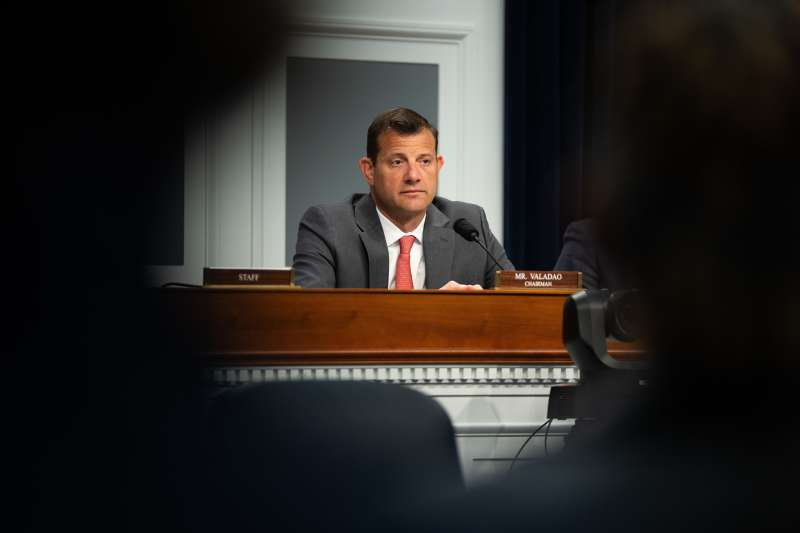
California’s 22nd Congressional District is shaping up to be one of the most closely watched contests of the general election, as Democratic nominee Randy Villegas seeks to unseat Republican Rep. David Valadao in a district where health care access has become the defining issue.
With the passage of Proposition 50, which enacted new congressional maps across California, Valadao now faces a redrawn district that narrowly favors Democrats.
The district sits in California’s agricultural heartland and relies heavily on safety-net programs that assist low-income residents across the region. Approximately 521,000 to 527,000 people are enrolled in Medi-Cal in the Central Valley district, representing about 67% of the district’s total population.
The vote on Trump’s domestic package
This leaves many voters wondering why Valadao cast the decisive vote to help pass President Donald Trump’s H.R. 1, also known as the “One Big Beautiful Bill Act” — a law that cut more than $1 trillion from Medicaid and other safety-net programs.
The sweeping domestic policy bill extended the 2017 Trump tax cuts, which were set to expire, and added additional tax provisions. Among the bill’s most consequential provisions are stricter Medicaid eligibility requirements, which California officials estimate could strip health coverage from roughly two million residents statewide.
The plan slashes over $1 trillion in Medicaid spending over 10 years, targeting the nation’s largest health care coverage program. It also introduces new work requirements, increases eligibility checks, and cuts SNAP, the food assistance program for low-income and working-class families.
A battle over accountability
Notably, Valadao’s support wasn’t limited to the final vote. He backed the measure at every procedural stage, despite having previously signaled he would not support Medicaid cuts.
Villegas, Valadao’s Democratic opponent, claimed this is a breach of trust with the constituents he represents in the Central Valley.
“He signed on to several letters saying that he wasn’t going to vote for this bill if it affected Medicaid in any single way…and the moment he got the opportunity to vote on it, he voted in favor of H.R. 1. He lied to us. He betrayed our communities, and he doesn’t even have the courage to show up and explain to people why he voted the way that he did,” he said.
Valadao’s team released a statement in May 2025, the same day H.R. 1 passed the House vote, defending his decision:
“After months of meetings with my constituents, Central Valley healthcare providers, and my congressional colleagues, I successfully preserved the integrity of the program and prevented proposals that would disproportionately impact California. This bill honors my commitment to protect Medicaid for our most vulnerable populations, while implementing commonsense reforms to strengthen the program. As this process moves forward, my priorities remain the same, and I am committed to working closely with my colleagues in the Senate to ensure critical programs like Medicaid and SNAP are protected for those who need them most.”
Courier California reached out to Rep. Valado’s office for comment but had not received a response by the time this story was published.
Valadao’s predicament reflects a broader challenge heading into the general election: he must defend his record on a polarizing policy in a competitive district. His constituents’ reliance on Medicaid makes his vote to gut the program a central liability, not a footnote.
While some Central Valley voters may view this as a standard policy disagreement, others may see it as betrayal in a district defined by economic precarity. As a result, one issue could determine the outcome of a House race and reshape Congress’s balance of power.