The California primaries are over, but the election season is not over yet. With November just months away, candidates and campaigns are kicking into high gear ahead of the general election.
Californians will make their voices heard this fall and select a new governor for the first time in eight years. Voters will also head to the polls—or cast mail-in ballots—to elect US House members, choose local leaders like mayors and city councilmembers, and even decide whether to tax billionaires.
Here are some of the highlights of what California voters should look for on the ballot:
Who will be California’s Governor?
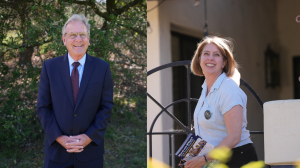
After eight years, California will be replacing term-limited Governor Gavin Newsom. After a contentious primary, Republican Steve Hilton will face off against Democrat Xavier Becerra in the November general election.
Although Hilton received the highest vote share in California’s open primaries, where all candidates across parties compete in the same race, early polling from the Institute of Governmental Studies suggests that Becerra has a significant advantage without other Democratic contenders splitting the vote.
Becerra is a former California attorney general, longtime member of Congress, and former US Secretary of Health and Human Services. Becerra has called the homelessness crisis a “policy failure” and promised to declare a housing emergency on his first day in office. He vowed to direct agencies to eliminate process barriers, defund failed programs, and invest in mental health infrastructure.
His campaign has also promised to limit federal immigration enforcement, maintain Medi-Cal coverage for undocumented residents, and use California’s political infrastructure to push back against illegal overreach by the Trump administration.
Becerra emerged from a crowded primary field, despite critiques from some fellow Democrats over his acceptance of contributions from Chevron and his refusal to back single-payer healthcare. If elected, Becerra would become California’s first Latino governor.
Hilton is best known as a conservative commentator for FOX News and as a former adviser to former British Prime Minister David Cameron. He has said he hopes to make California the “crypto capital of the world,” and his campaign website says he plans to eliminate state income tax for Californians’ first $150,000 of income and charge a flat 8% tax for anyone earning above that.
If enacted, the total revenue reduction from the plan would be approximately $60 billion. This would force deep spending cuts in the state, bringing state spending back to roughly pre-pandemic levels, and would likely hit education, healthcare, social services, and infrastructure the hardest.
Hilton’s notable donors include Fox Corporation Chairman Emeritus Rupert Murdoch, Alphabet and Google co-founder Sergey Brin, and Intuit founder Scott Cook.
Key US House races
California’s 2026 US House elections are the first since voters passed Proposition 50, which redrew congressional maps to give Democrats a chance to win more seats in Congress in response to Republicans gerrymandering maps in states like Texas and North Carolina.
The two most competitive races heading into November are:
CA-22 (Central Valley/Bakersfield): Democratic candidate and college professor Randy Villegas will face off against Republican Rep. David Valadao. With the passage of Proposition 50, Valadao now faces a redrawn district that is narrowly favorable to Democrats. Villegas defeated an establishment-backed moderate Democrat in the primary and hopes to flip the district, which is considered a toss-up.
CA-48 (San Diego): Republican County Supervisor Jim Desmond will face Democrat San Diego City Councilmember Marni von Wilpert in the race for California’s 48th Congressional District. Democrats aim to flip the Republican seat vacated by Rep. Darrell Issa, who retired after Prop. 50 redrew his district. The new map hands Democrats a structural edge by excluding Republican-leaning cities east of San Diego and including heavily Democratic Palm Springs. In the primaries, Desmond led the field with 41.2% of the vote, while Wilpert advanced with 20.2% of the vote due to the presence of several other Democrats in the race. The two will square off in the November general election, with Wilpert a slight favorite.
Which statewide ballot measures matter most?
Billionaire Tax
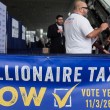
California’s billionaire tax proposal recently gained enough signatures to qualify for the November ballot, despite opposition from tech companies, some labor unions, and Gov. Gavin Newsom.
The California Billionaire Tax Act proposes imposing a one-time 5% tax on any California resident with a net worth exceeding $1 billion. The revenue would go into a special fund allocated for state health care programs, such as Medi-Cal, food assistance, and public education.
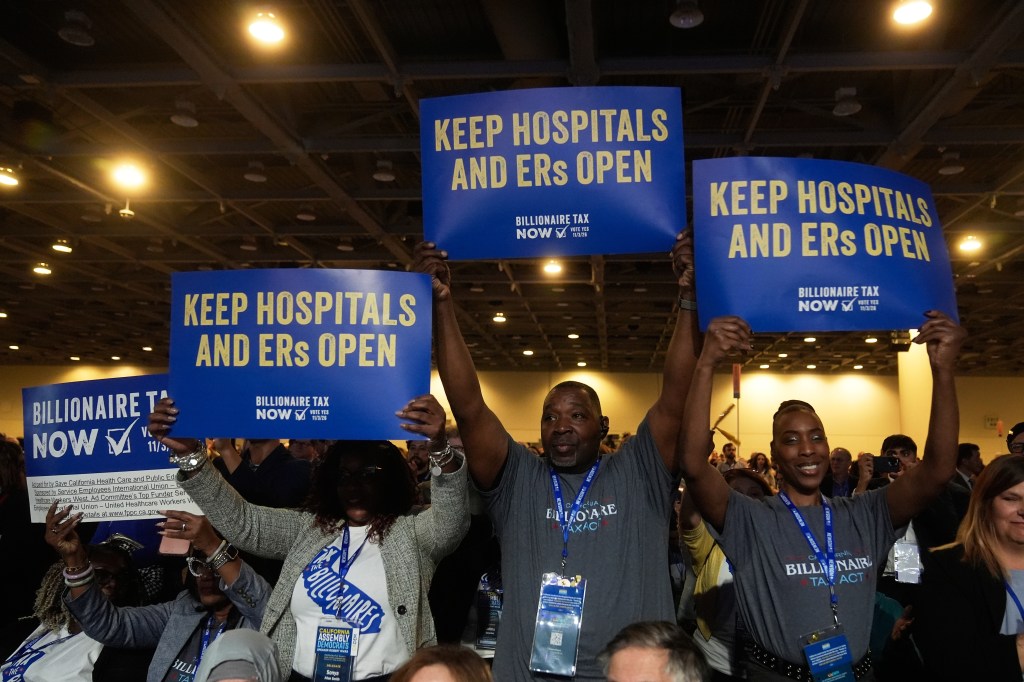
While opponents claim the ballot initiative would drive business out of the state, the measure is backed by nearly 40 unions, advocacy groups, and national organizations, including labor unions such as the Service Employees International Union-United Healthcare Workers West (SEIU-UHW), AFL-CIO, American Federation of Teachers (AFT), American Federation of Government Employees (AFGE) and UNITE HERE.
But some other unions, like the California Teachers Association and the State Building and Construction Trades Council of California, oppose the measure.
The organizations backing the proposal sent Newsom a letter last week offering to scale the 5% tax back to a 2% tax as a compromise, which the coalition said would help restore two years’ worth of funding cuts. Newsom rejected the offer.
Voting rules and voter ID
The ‘California Voter Identification, Citizenship Verification, and Registered Voter List Administration Initiative’ would require voters to present a government-issued ID for in-person voting or provide the last four digits of a government-issued ID designated during voter registration for mail-in voting.
Republican supporters of the measure argue it would strengthen election security and prevent fraudulent voting—something that is exceedingly rare in California, with even the conservative Heritage Foundation finding just 70 documented cases in the past 25 years, out of tens of millions of votes cast.
Opponents argue it could make voting more difficult and unfairly targets poor people and Black and Latino voters who are less likely to have official identification.
Public campaign financing
A legislatively referred measure, the California Fair Elections Act, would expand public financing of political campaigns by repealing the ban on public funding. Authored by State Sens. Thomas J. Umberg (D–Santa Ana), Ben Allen (D–El Segundo), and Sabrina Cervantes (D–Riverside), and Assemblymember Alex Lee (D–San Jose), the measure has been framed as a way to combat “big money” in politics.
Supporters, such as the League of Women Voters of California, say it could reduce the influence of wealthy donors and amplify the voices of small donors and everyday voters. Detractors, such as the California Taxpayers Association, argue that taxpayers should not subsidize political campaigns.
Recall election rules
Another constitutional amendment would change the rules governing recalls of state officers. If enacted, the California Eliminate State Officer Recall Successor Elections Amendment would change the process for recalling state officers by eliminating the simultaneous successor election. Under the current system, if an officeholder is removed, the replacement candidate with the most votes takes office—even if they don’t earn a majority.
Sponsors of the amendment have said the current system “offers bad actors an incentive to target an elected official with whom they disagree and to have the official replaced by someone who otherwise would not enjoy the support of a majority of voters.”
If approved, voters would only decide whether to remove the official in a recall. If a majority votes yes, the office becomes vacant, and normal succession rules take effect, which vary by office. If the governor is recalled, the amendment would authorize the lieutenant governor to fill the vacancy through the remainder of the term, unless the recall occurs during the first two years of the governor’s term and before the nomination deadline for the next statewide election. In that case, a successor would be chosen through a special election held alongside the next statewide primary election.
The candidate who wins a majority of votes would serve the remainder of the term. If no candidate wins a majority, the top two candidates would face each other in a runoff in the ensuing statewide general election, with the winner serving out the term.
Los Angeles Mayoral Race
City Councilwoman Nithya Raman faces incumbent Mayor Karen Bass.
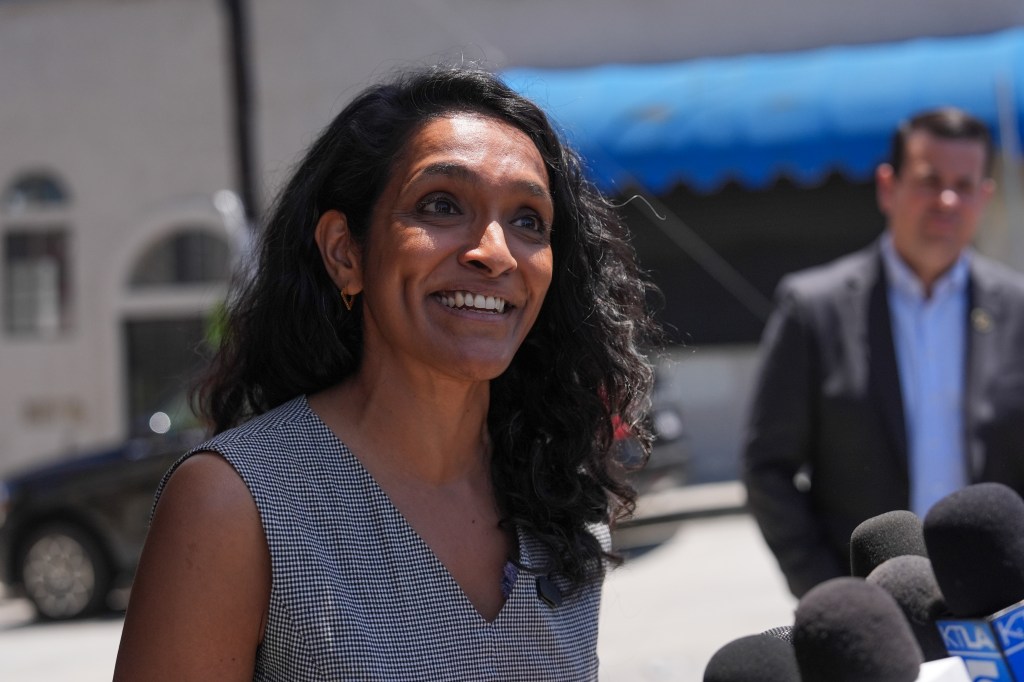
Incumbent Mayor Karen Bass will face Los Angeles City Council member Nithya Raman in a November runoff. Bass finished first in this month’s primary with 34% of the vote, while Raman placed second with 29% of the vote, ahead of Republican and former reality TV star Spencer Pratt.
Bass is broadly backed by establishment Democrats and organized labor coalitions, such as the Los Angeles County Federation of Labor (AFL-CIO), which represents more than 800,000 workers across 300 unions.
Bass created the “Inside Safe” initiative to reduce homelessness in Los Angeles, which her campaign credits for contributing to the 10% decrease in street homelessness. This remains her signature program, though doubts persist about the program’s success and long-term sustainability.
She has also pointed to declining crime rates as a measure of success under her administration.
Bass’ critics have questioned her administration’s effectiveness in crisis response, particularly following the 2025 Palisades and Altadena wildfires. Bass drew criticism for the city’s perceived lack of preparedness and inadequate response to the fires, which destroyed more than 16,000 structures.
Raman, a second-term city councilwoman, stunned the LA political world by announcing her candidacy in February. Raman’s mayoral campaign is backed by a progressive donor base in Hollywood and activist circles, and she has received endorsements from organizations such as The Alliance of Californians for Community Empowerment (ACCE) Action and The International Union, United Automobile, Aerospace and Agricultural Implement Workers of America (UAW).
Raman has vowed to address the housing and affordability crisis by eliminating “red tape” and building housing faster. She also plans to allow duplexes, triplexes, and fourplexes in single-family-zoned neighborhoods near transit hubs as a central fix for LA’s affordability crisis.
Raman, who first won in 2020 with the backing of the Democratic Socialists of America’s Los Angeles chapter, has faced some criticism from the left in recent years. In particular, Raman faced backlash for her votes on police budgets, her shift on housing policy, and her acceptance of an endorsement from the pro-Israel group Democrats for Israel–Los Angeles amid Israel’s war in Gaza.
If elected, Raman would be the first South Asian woman to hold the post.
What other offices are on the ballot?
Come November, California voters will also elect:
- Lieutenant Governor
- Attorney General
- Secretary of State
- State Controller
- State Treasurer
- Insurance Commissioner
- Superintendent of Public Instruction
- State Board of Equalization members
These offices exercise substantial authority over elections, taxation, insurance regulation, education policy, and state finances.