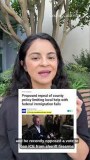
Former San Francisco supervisor and civil rights attorney Jane Kim defeated state Sen. Ben Allen in the Nov. 3 election to succeed term-limited Insurance Commissioner Ricardo Lara.
It was the first general election for the office between two Democrats. Kim declared victory Nov. 6 after Allen called to concede. She’ll be the first woman and first Asian American in the job.
Although Kim ran on a progressive platform, later counts showed her with more than 53% of the vote and a lead of more than 600,000 votes as of Nov. 3. She was endorsed by US Sen. Bernie Sanders (I-Vermont) and the California Nurses Association. Both candidates pledged not to take insurance industry money, and Kim also refused corporate PAC donations.
Starting January 4, 2027, she’ll regulate the industry she campaigned against.
What Jane Kim wants to change
The centerpiece of Kim’s campaign was “Natural Disaster Insurance for All,” a publicly run, nonprofit program. She modeled it on government-backed disaster insurance in New Zealand, France, and Spain.
Under the proposed model, homeowners who buy private policies would also get wildfire and flood coverage through a state authority, funded by a share of the premiums they already pay.
Kim argues the structure would reward homeowners who harden their properties against fire.
She has also pledged to overhaul the FAIR Plan, the state’s insurer of last resort. Its thin coverage left many Palisades and Eaton fire survivors struggling to rebuild, and a Los Angeles judge ruled in 2025 that it unlawfully handled smoke-damage claims. An average 29.1% rate hike for its more than 675,000 customers took effect in October.
Other proposals outlined in her campaign’s policy brief include expanding California’s low-cost auto insurance program and linking insurers’ right to sell auto policies in the state to their willingness to write home coverage.
What could get in her way
Kim has acknowledged the plan would need approval from the state Legislature and the governor. Even within her own party, critics warned it could hurt California’s insurance market.
“Conceptually, we don’t disagree with her, but what’s missing from her concept is pragmatism and a reality check,” Amy Bach, executive director of United Policyholders, told Washington Monthly in July. “It feels like she’s making a campaign promise she won’t be able to back up.”
Allen, who campaigned on broad wildfire mitigation instead, criticized the public insurer proposal as a costly plan that would shift major risk onto the state. “Will taxpayers be backstopping it?” Rex Frazier, president of the Personal Insurance Federation of California, asked in CalMatters’ coverage of Kim’s win.
The central tension of Kim’s term is already clear. She won by running against the industry, but delivering on her biggest promises will require persuading lawmakers and keeping insurers writing policies in a market many have been retreating from.
The commissioner approves rate hikes and policies on how insurers handle claims, but new programs require Legislative approval. Kim has said she is already meeting with industry executives, and two major industry groups have said they want to work with her.
She also inherits the Department of Insurance’s pending actions against State Farm and the FAIR Plan over how they handled claims from the Eaton and Palisades fires.