Reporting by Wes Woods II, Ventura County Star
A growing number of residents across Ventura County are raising concerns about privacy, surveillance and data collection from the use of automated license plate reader cameras.
The systems are used in nearly every city in the county, including areas patrolled by the Ventura County Sheriff’s Office.
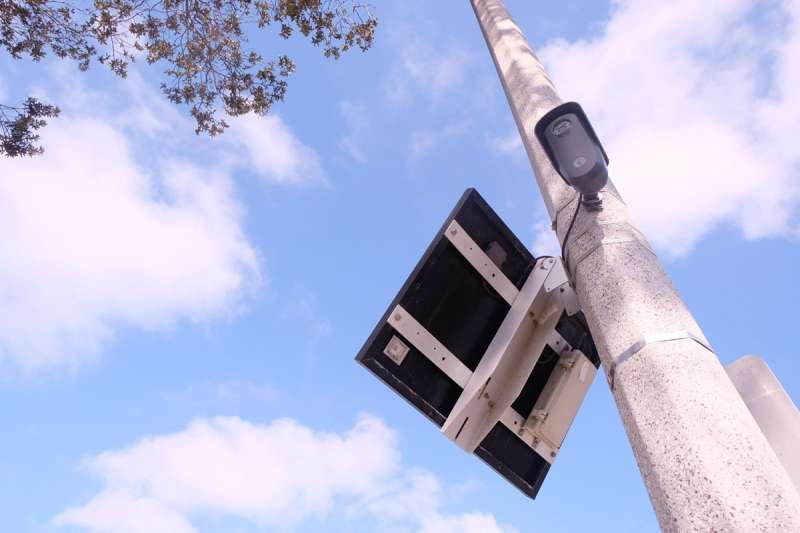
Ventura is among the latest cities debating the technology, which uses cameras mounted on poles and patrol vehicles to capture license plate information.
The Ventura City Council plans to review options for the police department’s use of the cameras on 5 p.m. Nov. 12 at a special meeting, said Police Chief David Dickey. Council members could renew or terminate the existing contract, according to the staff report.
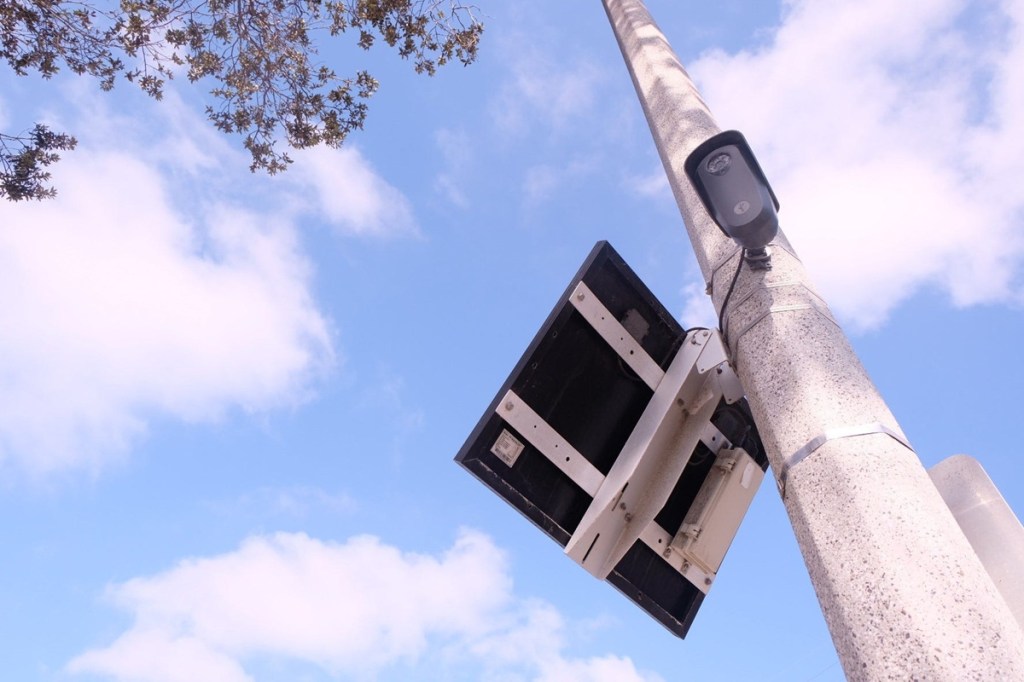
Also known as Flock Safety cameras, these devices have drawn national attention following reports of unauthorized access to footage that led to arrests and investigations involving police and sheriff’s officers.
Ventura resident and activist Michelle Rosenblum said she opposes the cameras and plans to tell the City Council to cancel the contract with Flock at the meeting.
“It is a tremendous violation of our privacy,” she said. “To me, what’s the difference between having Flock cameras on every corner versus us all having to wear ankle monitors without a warrant or without a court order.”
The technology changes the relationship between residents and law enforcement, she said. Traditionally, police investigate crimes after they occur and gather evidence tied to a specific incident.
“This entire system is turning that on its head,” Rosenblum said. “What they’re doing is they’re gathering evidence of everybody all the time. Then, when a crime occurs, they are combing through that evidence. That’s not OK.”
Dickey said the technology can help law enforcement develop investigative leads more quickly, recover stolen vehicles and prevent crime.
“It can also provide time- and location-specific evidence that a vehicle was recorded at a particular location,” he said.
He added that privacy, data security, information and oversight are “important considerations” when evaluating the technology’s use.
The Ventura meeting, which will consider renewing the city’s contract for the Flock cameras, comes as Port Hueneme and Oxnard have already moved away from the technology.
What led to concerns over license plate readers
The two cities decided to withdraw from Flock after data breaches involving the technology occurred earlier this year throughout the county, including Oxnard and Port Hueneme. The breaches also affected the Ventura County Sheriff’s Office, which contracts police services to five cities and unincorporated areas, as well as Ventura, Simi Valley and Santa Paula.
According to a Feb. 27 statement from multiple Ventura County law enforcement agencies, a feature that turned off national searches of Flock’s automated license plate reader system was inadvertently turned on. The error resulted in hundreds of thousands of data searches by federal and out-of-state agencies in violation of state law.
The Ventura County Sheriff’s Office, which contracts police services to five cities and unincorporated areas, said it audited its system Feb. 11 and discovered out-of-state agencies accessed the sheriff’s license plate reader system just over 364,000 times. The justification for 299 of those searches referenced immigration enforcement, the sheriff’s office said.
In Oxnard, the city allowed its contract for stationary Flock cameras to expire in March, said Police Chief Rocky Marquez.
“We chose not to renew the contract due to concerns regarding Flock’s ability to adequately safeguard our license plate recognition data following a data security incident,” he said.
Some cities use different brands of license plate reader cameras, while others limit their use to patrol vehicles or fixed locations.
Like Ojai, Oxnard uses Axon cameras mounted on the patrol vehicles and integrated with in-car dashboard systems. The equipment has been in service since May 2026, Marquez said. The Axon system has been valuable in finding stolen vehicles, missing persons and investigating violent crimes, he said.
“There are no plans to discontinue the use of Axon ALPR, as its data security measures and audit logging capabilities have proven to be effective at securing ALPR data,” Marquez said.
On Sept. 21, the Port Hueneme City Council voted unanimously to switch its fixed license plate reader system from Flock to Axon after a lengthy debate.
“The city did have concerns about the recent privacy-related issues with Flock cameras on their end of the system,” said Port Hueneme City Manager James Vega in an email.
Vega said the city has used Flock cameras for years and closely manages the system.
“They’ve been a critical tool for our police department,” he said.
Port Hueneme does not use the cameras in its department vehicles, similar to the city of Santa Paula.
However, Santa Paula approved the use of Flock cameras in 2023 because the system “best integrated” with other law enforcement agencies in the area, including the sheriff’s office and the California Highway Patrol, said City Manager Dan Singer in an email.
Cytlalli Salgado, a Santa Paula resident who works as a Santa Paula organizer with nonprofit Central Coast Alliance United for a Sustainable Economy, or CAUSE, said the Flock cameras are causing concern.
“We’ve noticed the areas with Flock cameras have more ICE presence and worry this is the workaround,” she said.
Salgado said the police department has stated it is not working with U.S. Immigration and Customs Enforcement, but she believes ICE could use data collected through Flock cameras to obtain information from a system not directly controlled by the department.
In Ojai, the city doesn’t use fixed, pole-mounted Flock cameras or other license plate cameras within city limits but its patrol vehicles use Axon cameras, said Police Chief Tyler Abbott, a sheriff’s office captain. There are five fixed Flock cameras in the Ojai Valley, outside of city limits, he said.
Ojai contracts with the Ventura County Sheriff’s Office for police services and in 2025, the sheriff’s office implemented Axon cameras in its vehicles, including those used by deputies serving Ojai, Abbott said.
In September 2025, records reviewed by the Star showed that 211 police-operated license plate readers scanned more than 130,000 vehicles a day.
Ventura County Sheriff’s Cmdr. Eric Tennessen, who also serves as Camarillo police chief, said he discovered the Flock breach through an audit he requested. He has defended use of the cameras at Camarillo City Council meetings and said they have become an important investigative tool.
“We have had them help us identify suspects in homicides, we have successes on almost a daily basis,” he said. “Where it’s generating leads and pointing us in the direction of suspects, I can tell you that crimes are being solved faster than they’ve ever been because of the usefulness and the benefit of license plate readers.”
On Nov. 18 in Moorpark, officials are planning to have a discussion of its Flock cameras and a proposed amendment to relocate cameras along Los Angeles Avenue, a state highway under Caltrans ownership, to city-owned right-of-way, said Brian Chong, a Moorpark spokesperson.
“We expect to bring that proposed amendment, as well as a full discussion of ALPRs, at the same time so the City Council can address the issue more holistically all at once,” Chong said.
Jessica Ansari, the founder of Moorpark Moms for Progressive Values, said her organization is seeking accountability, evidence and constitutional protections. Moorpark Moms for Progressive Values is a grassroots group of local moms focused on civil liberties, accountability, public schools and civic engagement, she said.
“We are pro law enforcement, but we’re not pro giving the police whatever they want just because they want it,” Ansari said. “They’re here to enforce the law, not use private company technology to surveil every citizen regardless of our innocence.”
Ansari said the Flock system tracks every vehicle that passes a camera, regardless of whether a crime has been committed.
“We’re questioning whether the city’s fixed Flock license plate reader cameras provide a measurable safety benefit that justifies the risk to residents’ privacy and civil liberties,” Ansari said.
In Thousand Oaks, the city allowed its contract with Flock to expire in March 2026 after the sheriff’s office discovered data-sharing issues during an audit, said Ventura County Sheriff’s Cmdr. Jeremy Paris, who also serves as Thousand Oaks police chief.
“We chose not to renew the contract until we had a chance to review the changes that Flock was making to better protect our data,” Paris said in an email. “We expect this process to take some time.”
The sheriff’s office continues to fund Flock cameras in the city through a grant while officials evaluate vendors to determine the best system, he said.
Wes Woods II covers West County for the Ventura County Star. Reach him at wesley.woodsii@vcstar.com, 805-437-0262 or @JournoWes.
This article originally appeared on Ventura County Star.