California lawmakers are leading a push in Congress to keep taxpayers from bailing out the AI industry, much of which is based in their home state.
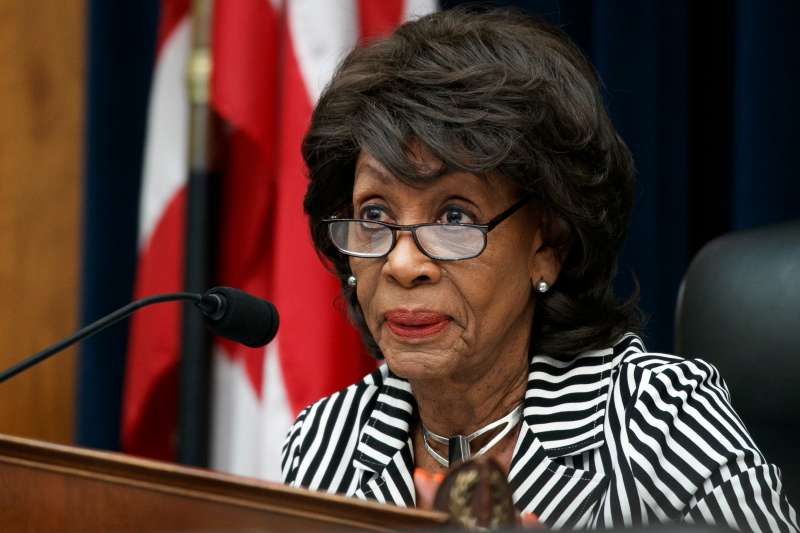
On Oct. 29, Rep. Maxine Waters (D-CA), the top Democrat on the House Financial Services Committee, and Congressional Progressive Caucus Chair Greg Casar (D-TX) introduced a resolution opposing any federal bailout of AI companies or their executives.
The stakes are high for California. The state is home to many of the companies at the center of the AI boom, including Nvidia, Alphabet, Meta, and OpenAI. An AI bubble burst would hit its economy and workforce hard. House Democrats say that if that happens, taxpayers should not foot the bill.
Twelve other House Democrats signed on, including Jesús “Chuy” García (D-IL), Pramila Jayapal (D-WA), André Carson (D-IN), Jan Schakowsky (D-IL), Brad Sherman (D-CA), and Rashida Tlaib (D-MI).
Early warning signs
The resolution points to warning signs and proposes that failing AI firms go through ordinary bankruptcy, that executives who broke the law be held accountable, and that federal support go to industry workers, retirees, and families instead.
Major AI firms currently hold trillions of dollars in debt, much of it raised in opaque private credit markets. Since October 2022, AI-related stocks have driven up to 75% of S&P 500 returns alongside earnings growth.
Nvidia, a leading AI company headquartered in Santa Clara, California, is worth about 16% of all Gross Domestic Product. This milestone was reached in October 2025 and was nearly triple the top tech firm at the dot-com peak.
Sponsors of the resolution also say regulators have long looked the other way on the tangled, circular deals funding AI data centers.
But the cracks are starting to show. On Nov. 5, the Nasdaq fell 5.5%, and chip stocks dropped more than 12% in one day. That same day, ING reportedly tried to unload about $500 million in data center loans.
In November, QTS, a data center operator backed by Blackstone, slashed a planned private debt sale from $800 million to $300 million when investors pushed back, The Business Times reported.
Bankruptcy, not bailouts
The resolution opposes any federal rescue of insolvent AI firms, including emergency Federal Reserve lending, Treasury support, or direct capital injections. Failing companies would instead go through ordinary bankruptcy.
Executives who made reckless decisions or broke the law would face civil and criminal accountability and would have to return ill-gotten gains—everything from mansions and yachts to golden parachutes. Federal support would go to workers, retirees, and families through job creation, unemployment insurance, nutrition and housing aid, and pension protections.
The measure is a “sense of the House” resolution, meaning it states a position rather than changing law. It has drawn endorsements from groups including the American Federation of Teachers, Americans for Financial Reform, Indivisible, and Social Security Works.
The sponsors frame the measure as a lesson from 2008, when banks received hundreds of billions in federal support while more than 10 million homeowners lost their houses to foreclosure.
“They should not pay a second time with a bailout,” said Morgan Harper, Director of Policy & Advocacy for American Economic Liberties Project. “When Wall Street’s bets went bad during the financial crisis, the banks got rescued, and ordinary people got foreclosure notices.” Americans are already paying for the A.I. build-out through higher power bills and a stock market propped up by a handful of companies.”
What’s next?
The push could soon reach the Senate. Semafor reported Sen. Adam Schiff (D-Calif.) also plans to introduce a resolution when Congress returns from its Thanksgiving recess, making clear that Congress must not “bail out corporations and wealthy investors taking speculative bets on the AI boom at the expense of working families, should the AI industry falter.”
Schiff’s resolution would oppose any federal rescue for AI firms or their investors in the event of a sector collapse.
He would be the first senator to introduce a measure like this, and it signals that Democrats think AI companies’ precarious financing will resonate with voters wary of AI and corporate power.
It also coincides with announcements from the ‘Broad Coalition Demands No Bailout for Billionaires,’ stating that Big Tech and Wall Street must not be shielded from the costs and consequences of an AI crash caused by their actions.
With Waters in the House and Schiff in the Senate, California lawmakers would take the lead on this issue in both chambers.
Dean Baker, a senior economist at the Center for Economic and Policy Research, emphasized that Congress is taking positive action.
He stated, “It is crucial that the Congressional Progressive Caucus is stepping up to ensure that any bailout resulting from the collapse of the A.I. bubble is designed to benefit the country as a whole, rather than just the billionaire A.I. creators who initially caused the problem.”