In California’s Central Valley, having a baby can mean long drives. As a result of maternity ward closures in recent years, the region has suffered from a “maternity care desert.” Many pregnant women who live in places like Madera County face disparities in maternal healthcare access.
All eight counties in the Central Valley are federally designated as “medically underserved areas”; however, labor and delivery services are even scarcer.
The limited availability of prenatal services in the Central Valley has left hospitals and medical facilities overburdened, making it increasingly difficult for patients to schedule the care they need.
One example of this was Madera Community Hospital, which reopened in March 2025 after being closed for more than two years without labor and delivery services. Consequently, Madera County was the only county in the San Joaquin Valley where pregnant individuals had no access to birthing services at a local hospital.
Seeking medical care in the San Joaquin Valley is often difficult due to language barriers, lack of transportation, the cost of healthcare, and patients’ fear of deportation.
Over the years, there have been efforts to address the healthcare gaps in the Central Valley, specifically for expectant mothers. In 2022, Obria Medical Clinics opened a center in Fresno to help pregnant women get the care they need. The clinic was built for “maternity care deserts” neighborhoods that lack medical resources. It offers basic services like prenatal checkups, health exams, and STD testing.
Limited access to reproductive health services and distance from prenatal healthcare centers remain among the region’s leading public health challenges. In Madera County, the median travel time to hospitals with maternity services is 30 minutes or more, according to the Public Policy Institute of California.
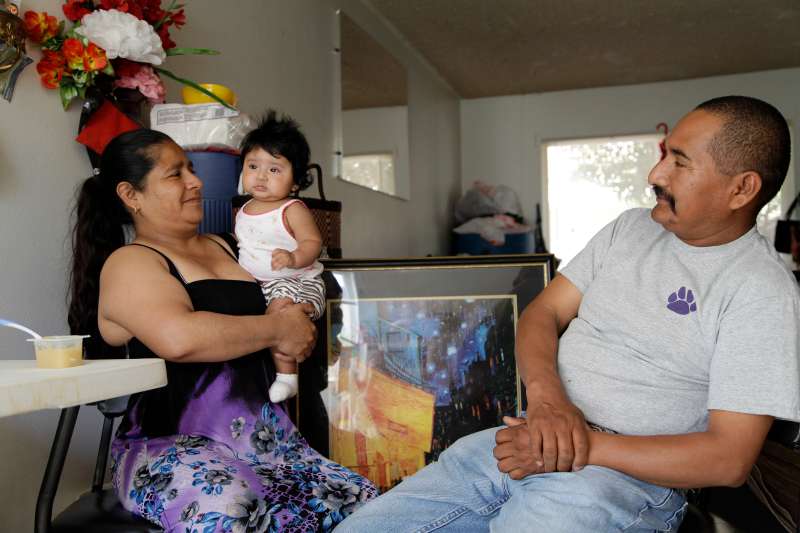
In 2025, a woman was forced to give birth at Madera Hospital, despite there no longer being a maternity ward. Rebeca Cervantes was 8 centimeters dilated when her husband decided to reroute to Madera Community Hospital instead of St. Agnes Medical Center in Fresno, which was 30 minutes farther out. Cervantes was able to deliver their baby safely, but she was treated for blood loss afterward.
Medical experts advise that a lack of access to prenatal care could lead to higher rates of infant mortality, low infant birth weight, and other pediatric health issues.
Even within cities, there are blatant inequities in the availability of prenatal care. Women living in North Fresno are more likely to receive adequate prenatal care than those in lower-income neighborhoods in South Fresno, where a large proportion of the population is Latino.
In recent years, many Central Valley residents have turned to more holistic birthing alternatives like doulas. A doula is a nonmedical companion who provides continuous physical and emotional support, acting as an advocate during labor.
On Jan. 1, 2023, California implemented a Medi-Cal doula benefit, expanding access to doula-attended births and related services for Medi-Cal enrollees. This has been a significant development for the Central Valley, where a large share of residents rely on Medi-Cal.
As pregnancy centers and maternity wards continue to close, midwives have also become an increasingly popular option. Midwives differ from doulas in that they are trained medical professionals who manage clinical care, deliver babies, and monitor health. However, midwife-led deliveries are considered safe only for low-risk pregnancies and can be pricey.
It’s a stark reminder that in the Central Valley, delivering options become significantly more restricted without proper access to healthcare and your zip code determines how safely you can deliver a child into the world.