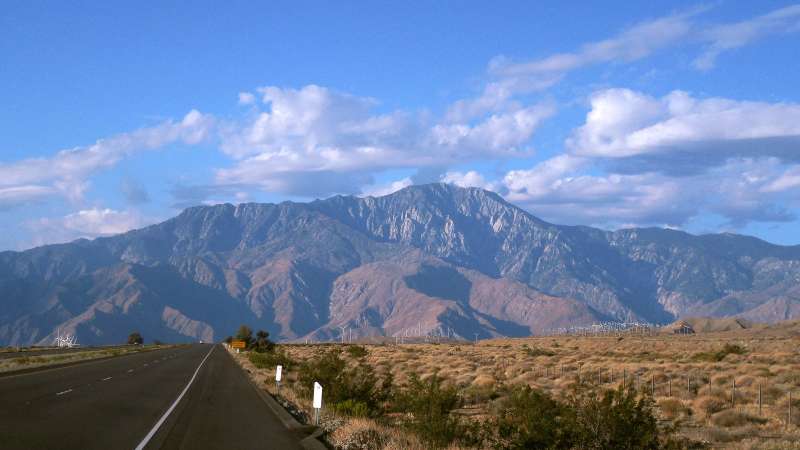
Mountain lions, bighorn sheep, and other wildlife trying to cross State Route 62 near Joshua Tree National Park often don’t make it to the other side. Now researchers are starting the first phase of work on two wildlife crossings over the highway.
The projects aim to curb collisions between cars and animals in the Mojave Desert.
The two bridges are part of a trend that wildlife experts believe will make a considerable impact on biodiversity in Southern California, especially among the mountain lion population.
Farther north,, officials have greenlit the development of three more wildlife crossings. These projects follow the construction of Wallis Annenberg Wildlife Bridge, which will soon open over the 101 Freeway in Agoura Hills.
The Joshua Tree project got underway specifically in response to a number of collisions that killed mountain lions along Route 62, including the death of a healthy 18-month-old male struck in April.
“This highway runs between two really important protected areas for wildlife, Joshua Tree to the east and Sand to Snow National Monument to the west,” wildlife biologist Kelly Herbinson told KTLA in May. “It’s essentially fragmenting the habitat, effectively keeping species like bighorn sheep, deer, black bear, and mountain lions from being able to move from one area to another.”
Herbinson warns that each project takes years to reach completion. The Joshua Tree project has only entered its first phase, which will comprise engineering surveys, permitting, and design. That alone is expected to take up to three years.
“After that, we’ll hopefully get funding to do that second phase, which is finalizing the designs and breaking ground,” Herbinson told KTLA.
The San Bernardino Sun reports that the first phase goes beyond engineering. Wildlife researchers will collect information on the species that roam the area to guide in the planning process.
On Oct. 7, trained detection dogs will be brought to the area to search for scat. Researchers will use DNA analysis to study how the different species move across the desert and identify patterns of genetic exchange among them.
“Generally, these genetic studies are long-term studies that can be informative for years to come and be used to track changes in genetic health as the crossings are adopted by wildlife,” Geary Hund, senior biologist and wildlife crossing project manager, told the Sun.
The wildlife survey is expected to be completed by April 2027, with a second phase that will include roadkill surveys running through December 2029.
READ MORE: Campground opens on Santa Cruz Island in remote national park