As election controversies intensify ahead of the 2026 midterms, California Secretary of State Shirley Weber continues to defend the state’s election system against federal efforts to gather sensitive voter data and cast doubt on how state-run elections are run.
Despite repeated claims from President Donald Trump that California’s elections are riddled with fraud, the state’s system remains legal, safe, and secure. California runs one of the largest election systems — with roughly 85% of voters casting ballots by mail — and backs it up with signature verification, secure paper trails, decentralized county operations, and felony penalties for tampering or fraud.
Civil rights and legal groups also protect California voters, including the ACLU of Southern California, MALDEF (Mexican American Legal Defense and Educational Fund), and the Asian Law Caucus — these organizations focus on language access, discrimination, and legal challenges to voter suppression rather than day-to-day poll assistance.
Documented cases of voter fraud remain extremely rare, generally estimated at a few thousandths of one percent of ballots cast nationally.
State officials and independent groups agree on one key point: California’s elections function as they should. The system is designed to find and address the few cases where problems occur.
How safe elections are run in California
California tracks its voter rolls through VoteCal, a centralized statewide database that checks registration information against official records and is regularly updated under the National Voter Registration Act. Under federal rules, counties contact voters to confirm an address, or to report a move.
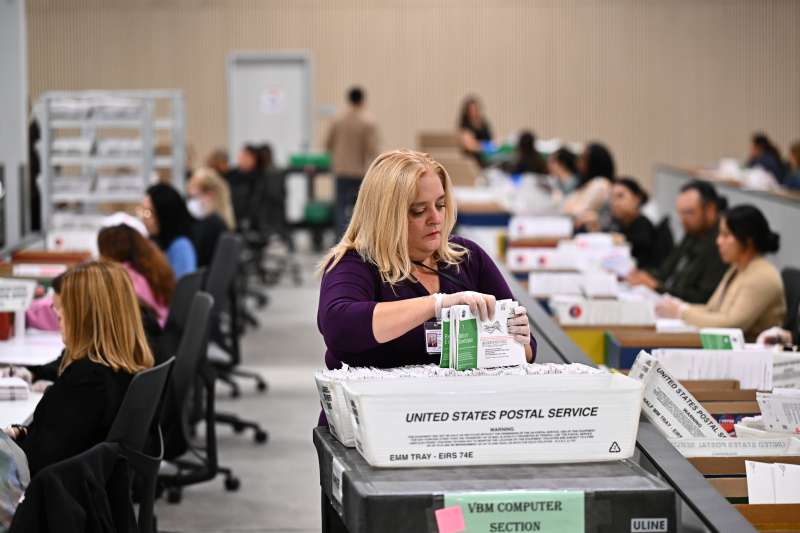
California automatically mails a vote-by-mail ballot to every registered voter, and voters can mail it back, use an official drop box, or bring it to a voting center. Many communities also offer early voting before Election Day for anyone who wants to vote in person.
To verify mail ballots, election officials match the signature on the return envelope to the signature on file. If a signature doesn’t match or is missing, the voter is notified and given a chance to fix, or “cure,” the ballot so it still counts — a safeguard other vote-by-mail states also use.
Nonpartisan organizations that help keep elections safe and fair
League of Women Voters of California: A nonpartisan, grassroots organization working to protect and expand voting rights and drive policy change on the biggest issues facing the state. The group provides general voter education plus policy advocacy at the state Legislature.
California Common Cause — A nonpartisan, grassroots government watchdog that uses organizing, litigation, policy research, and legislative advocacy to increase public participation in the political process. The organization runs an active Election Day protection program: nonpartisan poll monitors stationed in counties across the state, plus a bilingual hotline for voters, staffed by attorneys and legal experts familiar with California election law and federal voting rights law who can answer questions and troubleshoot problems.
Election Protection Coalition (866ourvote.org) — A national, nonpartisan coalition of more than 300 local, state, and national partners working year-round on voting rights, reachable at the same 866-OUR-VOTE number/text line for real-time help on registration, mail ballots, or in-person voting issues.
California Voter Foundation (CVF) — A nonpartisan nonprofit working through research, oversight, outreach, and demonstration projects to improve elections for voters, with a focus on election security auditing and voter confidence. The organization is currently pushing state legislation like a bill to let voters fix a mismatched mail-ballot signature by text message, and another to expand “sign, scan and go” ballot options.